[pageLogInLogOut]

#Dyeing, Drying, Finishing

Talking sustainability with Monforts denim customers
(c)2020 Monforts
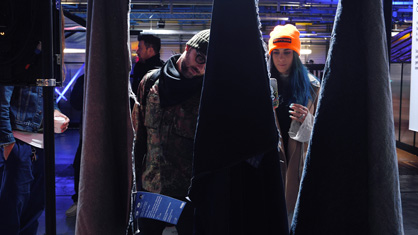
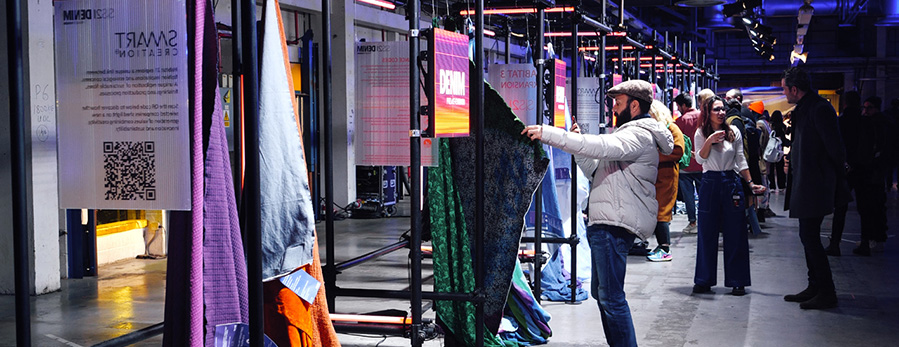
In the latest short film released on the Monforts YouTube Channel – captured at the recent Denim Première Vision show in London – some of the leading global manufacturers discuss their initiatives for more sustainable denim production.

Cone Denim, based in Greensboro, North Carolina, for example, can lay claim to having put in place its first environmental control measures back in the 1940s when the company first started recycling its water.

“It was a method of efficiency even back then, eighty years ago,” says Gabriel Magopat, of the company’s UK customer service centre, “but producing high quality products is another method of being sustainable and of being efficient, and I think that’s what Cone stands for. We have an amazing history.”

Cone Denim is known for its signature S Gene® stretch denims which have traditionally incorporated polyester components to provide the stretch. It has now partnered with Intrinsic Advanced Materials of Gastonia, also in North Carolina, to introduce patent-pending CiCLO stretch polyester fibres into its denim collections. 

While still being synthetic based, CiCLO polyester is able to biodegrade in marine environments, wastewater treatment plants and landfill conditions, at rates similar to natural fibres like wool. 

This more sustainable solution for stretch is also being introduced to China for the first time by another leading denim supplier, Advance Denim.

“Advance Denim is spending its resources on being the most technologically advanced company in China, and also the most sustainable,” says Mark Ix, the company’s Director of Marketing. “We are investing heavily in our manufacturing to save both water and chemicals to create cleaner products.”

Monforts denim customer Berto is a family-owned company with its main denim mill in Bovolenta, a small rural town near to Padua in the north east of Italy, where respect for the environment has always been a must.

“The family has always been focused on respect for the environment,” says Berto’s Marketing Manager Francesca Palento. “In particular, we have a river next to the company from which we take our water for production and we then return it cleaner than it was before. We are also now producing GOTS and Global Recycling Standard jean produced with yarns made from our own internal waste production.”

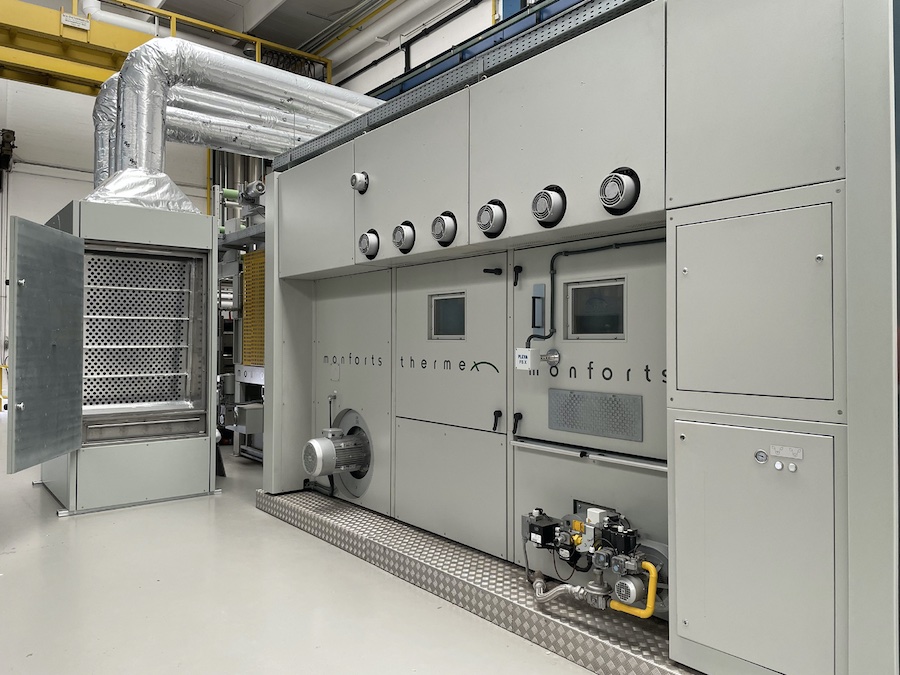
Pakistan’s Soorty has recently received Cradle to Cradle Gold certification – the most stringent and exacting sustainable standard currently in existence – for its Pure D range of denims. These are produced using the company’s proprietary Zero Waste Water dyeing technology, in combination with the most advanced Monforts finishing machines. 

“Our very latest collection is called Climate Jeans, because every single product we now produce draws attention to the climate emergency we are living through right now,” says Eda Dikman, Soorty’s Marketing Communications Manager. “Sustainability is very important to us because we produce at scale and all of the actions we take reflect on the planet.”

Scenes from the Monforts film from Denim PV:

(c) 2020 Monforts

The Monforts Denim PV film can be viewed here, or by visiting the Monforts website. 
More News from A. Monforts Textilmaschinen GmbH & Co. KG

More News on Dyeing, Drying, Finishing

#Advertorial

New Gravimax MMX-R X-ray sensor platform opens up new application fields

The demands placed on quality control in web-based production processes are increasing: materials are becoming more complex, basis weights are varying more widely, and at the same time, pressure is growing to make processes more efficient and transparent. Precise measurement data across the entire web width has therefore become a key factor in ensuring stable production processes. With its new Gravimax MMX-R sensor platform, Mahlo introduces a radiometric measurement solution designed to set new standards in determining basis weight and material composition. The platform combines advanced X-ray technology with newly developed signal processing, enabling measurement tasks that previously often required multiple sensor technologies.

#Techtextil 2026

BW Converting to present its Baldwin TexCoat® G4 at Techtextil 2026

BW Converting will present its Baldwin TexCoat® G4 precision spray finishing system at Techtextil Frankfurt 2026, taking place April 21-24 at Messe Frankfurt. Visitors to Hall 12, Booth C56B, will have the opportunity to explore how this advanced spray technology helps textile manufacturers improve finishing quality, increase efficiency and reduce resource consumption across a wide range of applications.

#Techtextil 2026

Smart sensors, smart savings - Reducing energy and cost in textile finishing

As energy prices, sustainability requirements and quality expectations continue to rise, manufacturers of technical textiles face increasing pressure to optimize efficiency while ensuring process reliability. At the same time, skilled labor shortages require production systems that are intuitive, automated and easy to manage. PLEVA addresses these challenges with robust, maintenance-friendly sensor technologies combined with intelligent process control.

#Dyeing, Drying, Finishing

Navis TubeTex and Fibroline announce upcoming Innovation Days

Navis TubeTex and Fibroline LLC announced their upcoming Innovation Days, a collaborative 3-day event designed to showcase advancements in product development technologies, and next-generation sustainable manufacturing solutions.

Latest News

#Raw Materials

New study shows low environmental impact by Cotton made in Africa Organic Cotton from Tanzania

Today, the Aid by Trade Foundation (AbTF) is announcing the results of a comprehensive life-cycle analysis (LCA) for cotton produced in Tanzania under the Cotton made in Africa Organic (CmiA Organic) standard. The study emphasises the small ecological footprint of CmiA Organic verified cotton. This can largely be traced back to the absence of synthetic pesticides, artificial fertilisers, and artificial irrigation. Consequently, CmiA Organic cotton can help the textile industry meet regulatory requirements as well as science-based targets. The results also show that the consequences of climate change threaten the livelihoods of these cotton farmers, even though the type of agriculture they practise barely contributes to climate change.

#Raw Materials

Better Cotton Initiative strengthens regenerative focus in standard update

The Better Cotton Initiative (BCI) has strengthened the regenerative focus of its field-level standard with the launch of a new version of its Principles & Criteria (P&C), which marks the next step in the organisation’s journey to becoming a regenerative standards system.

#Man-Made Fibers

Selenis and Kintra Fibers partner to scale 100% bio-based synthetic fiber technology

Selenis, a leading global specialty polyester manufacturer, today announced a strategic manufacturing partnership with materials science company Kintra Fibers to scale Kintra’s patented fiber-grade PBS resin - a 100% bio-based and biodegradable material designed for textile applications.

#Functional Fabrics

PERFORMANCE DAYS proves its relevance as the industry’s key meeting point

Held on March 18–19, 2026, PERFORMANCE DAYS once again confirmed its position as a leading international platform for functional textiles. A total of 3.366 trade visitors and around 560 exhibitors gathered in Munich, with the event already kicking off successfully on DAY 0, which received highly positive feedback for its interactive format. Despite challenging conditions caused by the public transport strike in Munich, the event saw strong attendance and a consistently high level of activity across both exhibition days.

TOP