[pageLogInLogOut]

#Digital Printing

KRONOS and Covestro demonstrate pigmented ink solutions for more sustainable textile printing

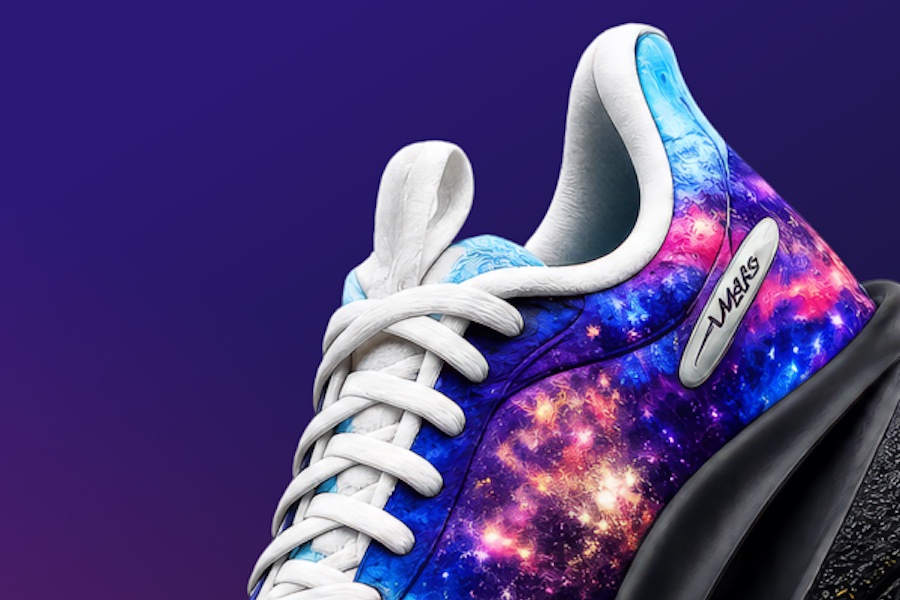
With harmonized raw material solutions from KRONOS and Covestro, inkjet digital printing can significantly reduce the environmental impact of the textile industry. © KRONOS
The textile industry aims to reduce its environmental footprint. Switching from analog printing to digital printing using pigment inks can enable an 85 percent reduction in waste materials, a 55 percent lowering of energy consumption, a 60 percent reduction of water consumption, and a 95 percent decrease of CO2 emissions, and represents an opportunity to make textiles more sustainable.

Digital textile printing also enables efficiency benefits such as shorter times to market and single-digit lot sizes produced close to end consumers. These advantages mean the adoption of inkjet printing is growing, but the technology will only reach its potential if it is supported by advanced formulations and carefully selected raw materials, specially designed for digital textile printing. Not all polyurethane binders are suitable.

  • Digital inkjet printing technology enables CO2 emission reductions by up to 95 percent
  • Remaining challenges are the pigment ink formulation and the threat of sagging in connection with the application
  • KRONOS and Covestro confirm the compatibility of their aqueous titanium dioxide pigment concentrate and waterborne polyurethane binders, respectively
  • Ink manufacturers can benefit from several advanced formulations for white inks that enable excellent jettability in the process


KRONOS, a leading provider of titanium dioxide pigments, and Covestro, a global leading manufacturer of high-quality polymers, are collaborating to demonstrate how innovative new material solutions can support the uptake of digital inkjet printing on fabrics, advancing the textile industry’s sustainability transition. Following testing by the two raw material suppliers and validation by industry partners, the collaboration successfully demonstrates that Covestro’s waterborne INSQIN® portfolio of Impranil® polyurethane binders and Imprafix® cross-linkers is compatible with the white pigment dispersion KRONOS 9900 Digital White. No significant sedimentation was observed, and all formulations showed good stability even after four weeks of testing at 50°C.

As such, the proven compatibility of the four Covestro binders Impranil® DL 1602, Impranil® DL 1618, Impranil® DL 1620, and Impranil® DL 1623 with KRONOS 9900 Digital White is an exciting development, opening the door to increased uptake of inkjet fabric printing. Together, these ingredients create a suitable formulation for a reliable printing process.


A new state-of-the-art binder tackles sagging

Covestro also developed a new polyurethane dispersion, Impranil® DL 1606, specifically to address the particular problem of sagging – a well-known quality issue resulting from the relatively high ink loads needed for direct-to-foil (DTF) printing, which was identified in the context of the collaboration. This state-of-the-art binder offers excellent anti-sagging properties and enables high white ink loads, making it a winning choice for white pigment inks used in inkjet printing. Its performance in compatibility, stability, printability, and image quality has been validated by Covestro’s innovation partners, meaning textile manufacturers can reap the environmental and efficiency benefits of digital printing with full confidence in a high-quality result.

Dr. Torsten Pohl, Head of Global Textile Coatings, Covestro: "By joining forces with another raw materials supplier, we can address two key pigment ink challenges facing the growing digital inkjet printing market: formulation and sagging. Working together with KRONOS brings us another step closer to a more sustainable textile industry!"

Jürgen Bender, Global Market Development Manager, KRONOS: "Thanks to this collaboration, we’ve ensured that our innovative KRONOS 9900 Digital White aqueous pigment concentrate is compatible with Covestro’s INSQIN® polyurethane binders – ideal for direct-to-foil textile printing. Moreover, the new KRONOS development addresses the need in inkjet applications for highest stability in bottle, drum, printhead, in-flight and on-substrate. Together, we’ve cleared a barrier to the uptake of more sustainable digital printing technologies."


More News from Covestro AG

#Textile chemistry

Covestro and Heraeus Precious Metals collaborate to enable safer, more sustainable antimicrobial textile coatings

Laboratory tests reveal that AGXX antimicrobial surface technology from Heraeus Precious Metals is fully compatible with Impranil® PU dispersions which are part of the waterborne INSQIN® textile coating technology from Covestro, paving the way for more sustainable antimicrobial textile coatings. This discovery comes at a key moment for the textile coatings industry. As the sharing economy continues to grow, more people are coming into regular contact with high-use surfaces, creating ideal conditions for bacteria, viruses, and other microorganisms to thrive.

#Textile chemistry

Covestro celebrates decade of innovation and sustainable growth

Covestro celebrates its 10-year anniversary today. Since its carve-out from Bayer in 2015, the company has developed into a global leader in high-performance polymer materials and a pioneer in circular economy solutions. With a strong focus on innovation and sustainability, Covestro’s materials are now embedded in countless applications worldwide – from mobility and construction to electronics, healthcare, and consumer goods.

#Textile chemistry

Covestro extends contract with CTO Dr. Thorsten Dreier ahead of schedule until 2031

Dr. Thorsten Dreier will remain Chief Technology Officer of Covestro for a further five years. The Supervisory Board has extended his contract, which runs until June 2026, ahead of schedule from July 1, 2026 to June 30, 2031.

#Textile chemistry

Suiting up Team Sonnenwagen with more sustainable sportswear created through a three-way partnership

Team Sonnenwagen Aachen, a solar racing collective from RWTH Aachen and FH Aachen, Germany, is on a mission to advance sustainable mobility solutions and become world champions. This August, the student team will participate in the 2025 Bridgestone World Solar Challenge, a biannual 3,000-kilometer race across the Australian outback. During the five-day event, 50 student teams from around the world will compete with solar vehicles that they must design, assemble, and drive themselves.

More News on Digital Printing

#Digital Printing

Epson launches SureColor G9000: high-production Direct-To-Film printer delivering greater productivity and reliability

Epson today announces the launch of the SureColor G9000, a new high-production Direct-To-Film (DTFilm) printer designed to meet growing global demand for flexible and efficient textile transfer printing. Expanding Epson’s DTFilm line-up alongside the SC-G6000, the SC-G9000 introduces enhanced speed, reliability and ease of maintenance for commercial garment decorators and textile producers.

#Digital Printing

Maximising print efficiency exploring ink saving features for modern print production

In today’s print industry, balancing quality, efficiency, and environmental responsibility is a growing priority. With increasing pressure on margins and sustainability, solutions that streamline production without sacrificing results are more relevant than ever.

#Digital Printing

Mimaki upgrades TS330 series for vibrant and seamless dye sublimation printing

The TS330 Series now provides users with an extended colour gamut, offering the flexibility to serve different markets profitably from one solution – from fashion to décor to signage – with improved colour vibrancy, fidelity and accuracy. Mimaki also introduces a larger solution to the TS330 Series, the TS330-1800, able to accommodate single-piece, wide textile fabrics, ideal for larger home décor applications.

#Digital Printing

Call for speakers and partners: Kornit Konnections 2026

Kornit Konnections today announced it is officially accepting speaker proposals and partner interest for what is set to be the most influential digital apparel industry gathering of the decade. Interested parties should visit www.kornitkonnections.com.

Latest News

#Technical Textiles

Cinte Techtextil China 2026: redefining business encounters for trending sub-sectors and cutting-edge technologies

The essence of a good trade fair is to create chance encounters to deliver tangible business value to its participants. Driven to stay ahead, Cinte Techtextil China is constantly seeking fresh strategies to keep the industry attuned to emerging trends, pinpointing high-potential segments for technical textiles and nonwovens. With a new zone and upgraded fringe events introduced, the last edition saw an impressive 17% increase in visiting numbers[1], and this year’s fair is set to leverage that success from 1 to 3 September at the Shanghai New International Expo Centre.

#Spinning

Rieter completes acquisition of Barmag

Rieter has successfully completed the acquisition of Barmag as of February 2, 2026. This strategically important acquisition makes Rieter the world’s leading system provider for natural and synthetic fibers.

#Nonwoven machines

Three ANDRITZ spunlace lines start operating at Alar Silk Road New Materials in China

Alar Silk Road New Materials and ANDRITZ have successfully commissioned three spunlace lines in crosslapped configuration at Alar’s facility in Aral City, Xinjiang, China.

#Raw Materials

Better Cotton Initiative opens enrollment in the US with promising opportunities for producers

Producer enrollment for the US Program of the Better Cotton Initiative (BCI) is open until May 15 for the 2026-2027 season. With over 2,600 members spanning the cotton supply chain and more than 11,000 users of its Better Cotton Platform (BCP) as of 2025, BCI’s standard is implemented in 15 countries and covers one fifth of global cotton production.

TOP