#Digital Printing
Innovation in digital color management for textiles
Until recently!
The Digital Textile Printing Market Outlook (2022-2029) reveals an expected annual growth of 16.3% to US$8 billion, and synergistic innovation is crucial.
As Malaysian Knitting Manufacturers Association (MKMA) director, Wayne Lian, notes, extrinsic factors such as the Covid-19 pandemic, plus the new norms of flexible working arrangements, portable technologies, and sustainability issues have affected the global textile supply chain landscape.

Digital Color Management & Innovation
A crucial component of this equation is digital color management. However, “delivering the right color in textiles and fibers is surprisingly complex, and there are many variables that must be considered to achieve an intended coherent color consistently,” surmises by Veera Pandiyan, the President of the Malaysian Logistics and Supply Chain Association (MLSCA).
Pandiyan is perhaps right. As Roland Biemans, the owner of LMNS in Netherlands, an industry expert offering color solutions in print production and visual communication clarifies, “the textile industry is not just one industry, it is a wide variety of segments that just happen to share similar components. All are application driven, and each needs its own approach. Meaning: even if there are similarities, none of them are the same.”
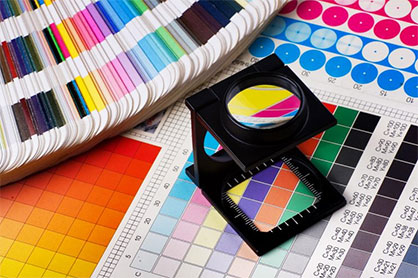
Hence collaborative innovation is key for both manufacturer and consumer. Gerd Willschuetz, Chief Operating Officer, and Co-founder at German-based DMIx, a standardized digital color and surface exchange for designers, product developers, and manufacturers believes the latest trends in digital color workflows and portable technologies have recently played crucial roles. He cites several. Among them: adoption of cloud-based color management tools; standardization of color data; focus on color accuracy and consistency; secure cloud-based storage and data management systems; reduced energy consumption; and efficient use of materials.

How will innovation improve textile sustainable development in terms of inclusiveness, connectivity, equity, duties of care and prevention, and cyber threats? Willschuetz opines manufacturers need to more effectively collaborate with suppliers, designers, and other stakeholders throughout the production process. He goes on to add that providing real-time data and information about the color quality of textile products will improve the accuracy of color matching.
Evidently, it “helps ensure the same high standards of color consistency is maintained for all products, regardless of their intended market.” One crucial ingredient for its eventual success is considering different stakeholder opinions—as it will reduce the risk probability of product defects and ensure high-quality products.
The Advent of AI
An important trend is the inclusion of AI and algorithms to enhance the innovation journey. Willschuetz explains two key enablers: predictive color modeling and automated color matching and quality. The former is where AI can analyze patterns in color data to predict which colors will be popular in the future, allowing manufacturers to anticipate trends and prepare accordingly. In addition, AI algorithms can analyze large amounts of data and use machine learning to match colors in real-time, making the color matching process more efficient, accurate, and automated.

With reference to color matching and dye formulation accuracy and consistency using AI, for instance, “ink deposition is the tool to get functional or decorative substrate coverage”, says Biemans.
He explains: “It’s always about the volume of ink, or rather the volume of colorant. This can be described in relation to ink drop volume, speed of production, resolution, [and] print mode … but it’s always the combination of print engine (whether analog or digital), fluid, substrate, and process.”
“If AI would be able to capture all parameters, all factors, all single elements and get those in a combination matrix, it could perhaps predict the probability of best-balanced production, offset against cost and quality,” says Biermans.

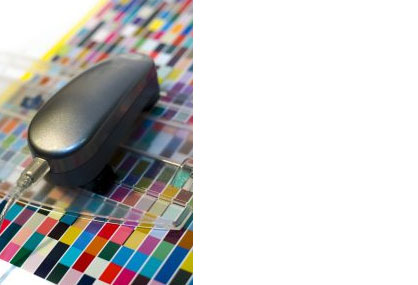
Which is precisely why, in the world of color, “the game-changing impact of newer and more sophisticated spectrophotometers with mobile phone applications cannot be understated,” clarifies Hussein Syed Mohammed, Vice-President of product and market development at Datacolor, the US-headquartered color management company. This translates “to instant digital decisions in color measurement with the added benefits of ensuring uniform assessment across multiple locations and throughout the supply chain with industry leading inter-instrument agreement; increasing productivity with fast measurement speed and response times, saving time with seamless backward compatibility to other instruments; accelerating operational confidence with sample temperature measurements, and lastly reducing measurement error with fool-proof sample placement positioning camera and the display.”
Digital Color & Sustainability
Sustainability is on everyone’s minds. So, how would the latest trends in digital color workflows reduce carbon footprints?

As Biemans expounds, “it is commonly posited that the textile industry is among the top five most polluting industries, where water and energy consumption, environmental contamination and product waste can no longer be ignored. There is growing awareness that almost 60% of fashion ends up in landfills within a year of leaving the production line. As much as 25% of globally produced chemical pounds are utilized in textile finishing.”
According to Biemans, “the production of apparel and footwear contributes just shy of 10% of global greenhouse gas emissions. It typically requires 7,500 liters of water to make a single pair of jeans and 2,700 liters of water to make one cotton shirt. Some fashion houses would rather incinerate unsold product than to see a market devaluation of the brand by selling at a discount.”
Willschuetz sincerely believes more efficient digital processes and including AI digital color workflows will allow for more streamlined processes, reducing the need for physical samples—which can be a major source of waste and pollution in the textile and fiber industries.
“By using digital tools, manufacturers can communicate color information more easily and accurately, reducing the need for physical samples, which can also save time and resources,” he says.
Both Willschuetz and Beimans are of the opinion digital inkjet printing would be the final bargain.
Biemans suggests treating the textile industry as a single, homogeneous industry with constructive and distinctive segments, each with its own idiosyncrasies and requirements. He says that, since the industry is huge with a diversity of applications, each having a wide variety of requirements, it is better to segment them: such as, for example, direct to garment (DTG); swim and sportswear; fast fashion; and high fashion.
He says that segmenting would lead to shorter lead times. “Localized production is key, as it entails shorter runs than is possible today with conventional methods.”
Today’s end customers—especially Gen Z and Apha—demand personalized or limited editions of the printed products.
For that matter, “even baby boomers insist on product traceability and shorter product timelines,” remarks Diana Voravibul, director of color services at US retailer Macy’s.
Success Drivers
Certainly, embracing real-time color data is the key driver of success throughout the supply chain, regardless of location, and ultimately defeating the shortcomings of pure visual analysis by objectively measuring, analyzing, communicating, and assessing color, inclusive of both the hardware and software.
In the final analysis, one thing is certain. Both Lian and Veera agree that “Future sourcing models will largely be redefined by how this sector addresses the underlying themes, such as embracing immersive technology, as sourcing countries prioritize the goals and integrate them into their national textile industry plans.”
Welcome to digital textile 4.0!
About the Author
Dr Thanaseelen Rajasakran is an Assistant Professor at Malaysian university, Universiti Tunku Abdul Rahman. He is passionate about all things concerning United Nations sustainable development goals—as Mother Earth and its co-habitant stakeholders are unable to tolerate human selfishness.