[pageLogInLogOut]

#Digital Printing

Spoonflower and Kornit mobilize

(c) 2020 Kornit
Being able to procure and install new systems within weeks demonstrates how strong a partnership Spoonflower and Kornit have.

In the Spring of 2020, Spoonflower, a North Carolina-based supplier of decorated textiles serving entrepreneurs, graphic designers, and DIY artisans worldwide, installed four new Kornit Presto S systems for roll-to-roll, direct-to-fabric digital decoration. This installation, which effectively doubled Spoonflower’s production capacity, was fast-tracked to answer a considerable increase in topline growth since the onset of COVID-19 restrictions disrupted the industry.

“Our business has seen phenomenal growth”

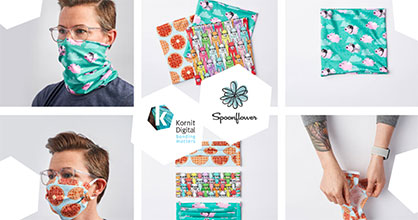
Spoonflower attributed the sudden increase in demand for decorated textiles to increased interest in home-based and DIY projects, as well as their Mask Response Project. The latter is a program the supplier initiated to give creators the means to design, manufacture, and distribute protective face masks to healthcare providers, community groups, and private citizens in all regions impacted by the pandemic.

“Our business has seen phenomenal growth the past 30-45 days, and we’re seeing a huge surge across all of our product lines,” says Michael Jones, Spoonflower CEO. “I’d say about a third of it is from personal protective equipment, face masks. Our makers are located around the world, and we’re able to provide them with unique designs and fabrics that foster personal expression. They’re for their local communities, and so whether it’s nurses, or people in different homes, they’re able to provide for their own local community where we wouldn’t be able to without their help.”

To keep up with that demand, Jones says “we’ve added 25,000 square feet of new operational facility in less than two weeks.”

Demand for self-expression persists

While facial protection was likely far from the minds of most Spoonflower customers just a few short months ago, the pandemic has created a new fashion paradigm, one that builds upon the established trends of customization and connectivity emerging from a digitized world.

“We’re seeing a lot of customers are making use of these products to really help empower their own mask-making efforts, and we’re seeing a tremendous surge in personalization and curation of print design,” says Kerry King, SVP of Research and Development at Spoonflower. “The masks people are making are speaking to who they are and what’s important to them.”

According to Gart Davis, Spoonflower’s Co-Founder and Chief Operating Officer, this speaks to his brand’s broader vision, which has long sought to empower the creative community to express itself through textiles.

“I ask myself now, during a pandemic, why there is so much urgency, so much need, not just for fabric—because there’s a lot of fabric in the world—but fabric that is expressive, that tells a particular story,” says Davis. “The Kornit technology, combined with the Spoonflower website, and marketplace, and designer community, is a perfect collaboration for responding to something that is happening now, and really demands expression.”

Davis stressed the role of online designers in driving the demand for protective masks.

“The army of Etsy makers jumped in and started making masks, and everybody went to explore different types of masks—are they comfortable, are they safe, what do they say about me—and a lot of the Etsy suppliers use Spoonflower fabric, and of course Spoonflower uses Kornit printers,” he says.


(c) 2020 Kornit
(c) 2020 Kornit

“Kornit and Spoonflower are running that race together”

Regardless of the application, delivering high-quality graphic impressions on demand, in a multitude of fabrics, has long been the foundation of Spoonflower’s business. Their partnership with Kornit extends back to 2013, when the web-based textiles supplier became the first North American business to install a Kornit system for digital direct-to-fabric printing.

“These printers are the core of our business,” says Sarah Ward, Spoonflower’s SVP of Marketing. “We print things, and need reliable, stable partners willing to go the distance with us, and I feel like Kornit and Spoonflower are running that race together. Being able to bring on new equipment, working together to make that happen, just goes to show how strong a partnership we do have.”

According to Ward, that partnership delivers a versatility that not only creates new opportunities in situations where more traditional legacy brands encounter financial hardship, but also addresses the question of whether the post-pandemic marketplace can still benefit from a more eco-conscious mindset.

“When you have 1.8 million designs, you simply can’t stock that many fabrics in one place—so the ability to print on demand, not only does it make for the world’s largest marketplace of designs, but it’s inherently sustainable and eco-friendly,” she says.

Weathering the storm

Kerry King has found comfort in reliable production processes throughout Spoonflower’s recent experiences.

“We are using all of our printing platforms to meet consumer demand across fabric and home décor, and we are seeing our vendors rise to the challenge to support our needs during an exceedingly difficult time,” says King.

Kornit has long viewed Spoonflower as an unsurpassed partner in demonstrating the value of its digital, sustainable, pigment-based direct-to-fabric textile decoration technology.

You can also view the written story here: https://www.kornit.com/case-study/spoonflower/.

For the video clip, click here: https://vimeo.com/423417623.

More News from Kornit Digital

#Digital Printing

USColorworks expands digital platform with Kornit Atlas MATRIX and Atlas MAX PLUS solutions

Kornit Digital Ltd. (NASDAQ: KRNT), a global pioneer in sustainable, on-demand digital fashion and textile production, today announced that USColorworks, a North Carolina-based apparel decoration and fulfillment company specializing in custom and on-demand printing for retail and promotional markets, has expanded its Kornit digital production platform with the addition of Atlas MATRIX and Atlas MAX PLUS systems to deliver high-quality, on-demand apparel across cotton, blended fabrics and polyester.

#Digital Printing

Kornit Digital announces commercial availability of Atlas MATRIX following successful global Beta program

Kornit Digital (NASDAQ: KRNT, "Kornit Digital", "Kornit", or the "Company"), a global leader in sustainable, on-demand digital fashion and textile production technologies, today announced the commercial availability of the Atlas MATRIX platform following the successful completion of a global beta program across leading production environments in Europe and North America. The announcement, made ahead of FESPA 2026 in Barcelona, marks a major milestone in the evolution of digital apparel production.

#Digital Printing

Kornit Digital launches Konnections 365

Kornit Digital (NASDAQ: KRNT) (“Kornit” or the “Company”), a global pioneer in sustainable, on-demand digital fashion and textile production today announced the launch of Konnections 365 - a year-round movement designed for the people moving the apparel, print, and retail industries forward. The strategy is built on the overwhelming success of Konnections 2026 held in Hollywood, Florida, featuring more than 500 customers, partners, and collaborators who together are driving the future of apparel and textiles.

#Texprocess 2026

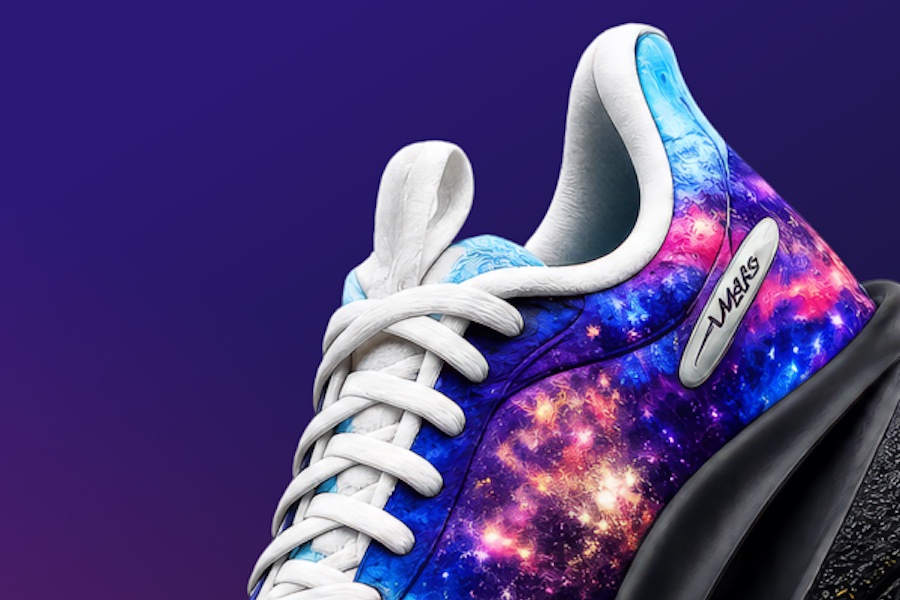
Kornit Digital expands digital production into footwear and technical textiles with Presto MAX PLUS

Kornit Digital (NASDAQ: KRNT) (“Kornit” or the “Company”), a global pioneer in sustainable, on-demand digital fashion and textile production, today unveiled the Kornit Presto MAX PLUS, a new roll-to-roll system expanding digital manufacturing into footwear, automotive interiors, military camouflage, high-performance sportswear, and high-end furnishings. Debuting at Texprocess 2026 in Frankfurt, Presto MAX PLUS enables entirely new applications for on-demand textile production.

More News on Digital Printing

#Digital Printing

DTF vs DTG Printing - The technologies shaping today’s custom merchandise market

From sportswear to branded tote bags, custom merchandise continues to grow in popularity across sectors, driving print shops to cater to short runs, personalisation, and rapid turnaround. As print providers look to this market, two printing technologies often stand out: Direct‑to‑Film (DTF) and Direct‑to‑Garment (DTG). Each offers its own benefits, and understanding these differences helps determine the most suitable production method for print service providers.

#Digital Printing

Mimaki celebrates Triple EDP Award win at FESPA 2026

Mimaki Europe, a leading manufacturer of industrial inkjet printers and cutting plotters, was presented with 3 EDP Awards at the association’s 2026 ceremony, held at FESPA Global Print Expo. These highly acclaimed awards celebrate best-in-class innovation across the print industry, and Mimaki was honoured in three different categories.

#Digital Printing

EFI brings high-performance display graphics, packaging, and textile printing innovations to FESPA 2026

Electronics For Imaging, Inc. (EFI™) is bringing a broad range of new hybrid, roll-to-roll, and textile inkjet innovations to FESPA Global Print Expo 2026, taking place 19-22 May at Fira Barcelona Gran Via. Visitors to the EFI stand (Hall 3, #C85) will see the new EFI VUTEk M3h X hybrid LED printer, new EFI VUTEk® FabriVU® 340 i8 eight-colour dye sublimation printer, the EFI VUTEk X5r roll-to-roll LED printer, and the EFI VUTEk Q3h XP seven-colour hybrid printer in action, each designed to help sign and display producers scale output, diversify applications, and drive more profitable growth.

#Digital Printing

Mimaki ‘Powers Possibilities’ with a market-diverse application and printer line-up at FESPA 2026

Mimaki Europe, a leading manufacturer of industrial inkjet printers and cutting plotters, is bringing its “Print Different - Powering Possibilities” theme to life at FESPA Global Print Expo 2026 (Fira de Barcelona, 19-22 May 2026), demonstrating how digital printing technology can turn ideas into high-value applications and new business opportunities.

Latest News

#Textile processing

YKK develops concept EXCELLA® zipper tape using nonwoven fabric partially derived from used clothing

YKK Corporation has developed a concept version of its premium EXCELLA® zipper series made from nonwoven fabric sheets created by fiberizing used clothing and other textile materials. Based on a proposal by fashion designer Yuima Nakazato, this item was created as a result of collaboration between Nakazato, Seiko Epson Corporation and YKK. The concept zipper was incorporated as a material component for pieces in the newest YUIMA NAKAZATO Couture Collection, “INFERNO,” which was unveiled in Paris, France on July 8, 2026.

#Textiles & Apparel / Garment

Texworld Apparel Sourcing Paris highlights evolving global sourcing landscape

From 31 August to 2 September 2026, Texworld Apparel Sourcing Paris will bring together more than 1,000 international exhibitors at Paris-Le Bourget Exhibition Centre. This edition reflects the new global balance of textile and apparel sourcing, highlighting a strong diversity of sourcing countries — some unexpected.

#Textile processing

Dedicated car seat model of SHIMA SEIKI’s P-CAM® R Cutting Machine unveiled

Leading Japanese textile solutions provider SHIMA SEIKI MFG., LTD. of Wakayama, Japan, showed a special version of its P-CAM® R multi-ply computerized cutting machine dedicated to the production of car seats for the first time, at a private exhibition held over two days on Thursday, July 2nd and Friday, July 3rd at the Kariya City Industrial Promotion Center in Aichi Prefecture.

#Research & Development

ALADIN paves the way for circular and demand-driven textile production in Europe

Textile production can be organized sustainably by utilizing short supply chains and preventing overproduction. This can already be achieved today by intelligently connecting and efficiently utilizing existing infrastructure. At the same time, production becomes circular when innovative technologies and materials are used that enable high-quality recycling. The ALADIN research project, launched in May 2026 and co-funded with five million euros under the EU Horizon Europe program, is creating the conditions for this.

TOP