[pageLogInLogOut]

#Digital Printing

Gartex 2018 a resounding success for Mouvent

TX801 at the Gartex booth (c) 2018 Mouvent
Gartex 2018, which took place from August 18-20 in New Delhi, India, has proven to be a massive success in terms of turnout, the show itself and visitors to Mouvent’s booth where the company was showing for the first time in India their revolutionary digital inkjet textile printer TX801. Gartex is a comprehensive tradeshow focused on garment and textile machinery, and it gives Indian market players in the garment & textile production industry an insight into the latest innovations and product launches.

The innovative TX801 digital textile inkjet printer at the Gartex 2018 Mouvent booth draw crowds

Just as with similar high-profile tradeshows in China and Turkey, Mouvent’s innovative TX801 digital textile inkjet printer made heads turn at Gartex. The ultra-compact TX801 prints with up to eight colors and, although it is a scanning type machine, can complete up to 50% of the print jobs in a single pass, delivering top-of-the-bill productivity of 200 sqm/h without compromising on quality.

The reason why the TX801 drew so much attention at Mouvent’s Gartex 2018 booth is its use of the revolutionary MouventTM Cluster Technology which uses clusters instead of fixed size print bars by colour, arranged in a modular, scalable matrix. This results in one system that can be simply adapted to all substrates of all widths, for all markets. Its print quality is extremely high with an optical resolution of up to 2,000 dpi. The machine can process knitted, woven and non-woven textiles with a maximum fabric width of 1,820 mm with roll diameters of up to 400 mm. 

“The TX801 showed how innovation guided by the needs of the market results in a pioneering product that delivers what that market has been waiting for,” said Ghislain Segard, Marketing and Sales Manager, Textile Machines at Mouvent. “The industry experts who saw the machine were delighted with its extremely high print quality that remains constant even at very high production speeds, as well as its precision and scalability. And we are very happy that companies will be able to immediately profit from the competitive advantage the TX801 is bound to deliver through our strategic partnership with Fortuna Colours & Prints LLP.”

Ghislain Segard (c) 2018 Mouvent


Vinod Krishnamurthy (c) 2018 Mouvent


Vinod Krishnamurthy, one of the co-founders of Fortuna Colours & Prints LLP, started digital printing on textiles in 1998. The company launched Mimaki, Reggiani, Hong Hua, Kornit, Huntsman and almost a dozen brands, ranging from ink over software to machines in India.

“We are very happy that we can help Mouvent bring the TX801 to customers in India. The Indian textile market is extremely varied, interesting and rapidly changing, and the TX801 perfectly responds to the need for a very high quality, productive digital textile printer,” Krishnamurthy said. “It came as no surprise to us that the presentation of the machine was met with such enthusiasm. After all, the Indian textile production market consists of companies producing exclusive high-quality textiles as well as huge-scale mass-produced products. The solutions Mouvent can offer are very well suited to this market.“

Gartex 2018 was also showcasing products, services and technologies related to the complete production chain. It was divided into several zones – including the DigiTex zone, which has an exclusive focus on Digital Textile Printing Technology.

More News from Mouvent AG

More News on Digital Printing

#Digital Printing

Scaling print-on-demand: Imperial Custom Apparel connects industrial printing with e-commerce automation

Combining industrial direct-to-garment printing with integrated production software, Miami-based Imperial Custom Apparel has expanded its production capacity, improved print quality and streamlined its operations. The installation of three Kornit Atlas MAX PLUS systems alongside GelatoConnect software has enabled the company to serve more sales channels with fewer employees and significantly simplified workflows.

#Digital Printing

From a bedroom startup to 3,000 designs: How Lonely Kids Club built its business with DTG printing

Founded in Sydney in 2011, independent clothing label Lonely Kids Club has grown from a bedroom startup into a business offering around 3,000 graphic T-shirt designs. With its own production studio, direct-to-garment printing and a demand-driven manufacturing model, the company demonstrates how smaller apparel brands can combine creative independence with flexible production – while navigating the everyday challenges of quality control, workflow efficiency and sustainability.

#Digital Printing

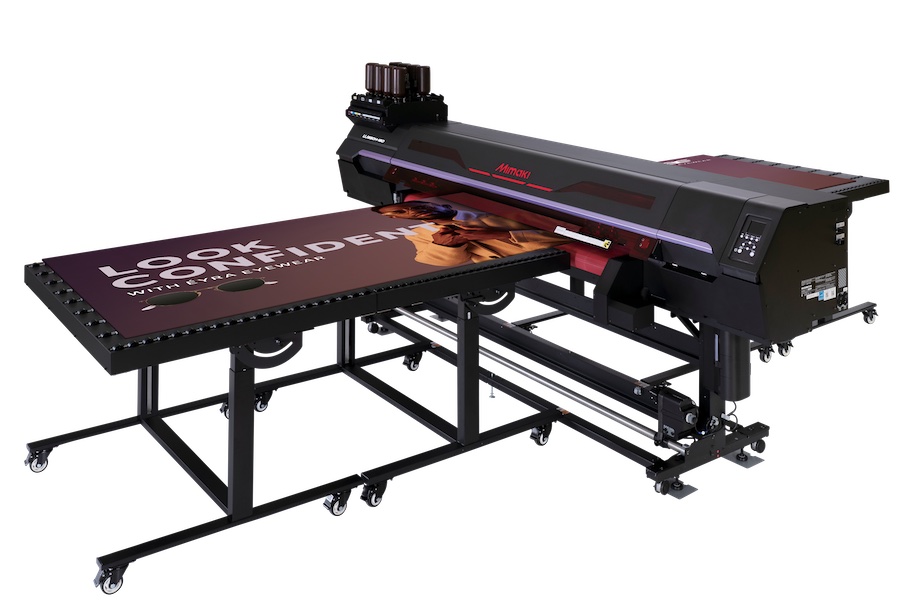
Mimaki highlights growing demand for hybrid UV printing across European markets

Insights from Mimaki's European partner network reveal how hybrid UV printing is responding to different regional market needs, driven by growing demand for flexible, application-oriented printing technologies.

#Digital Printing

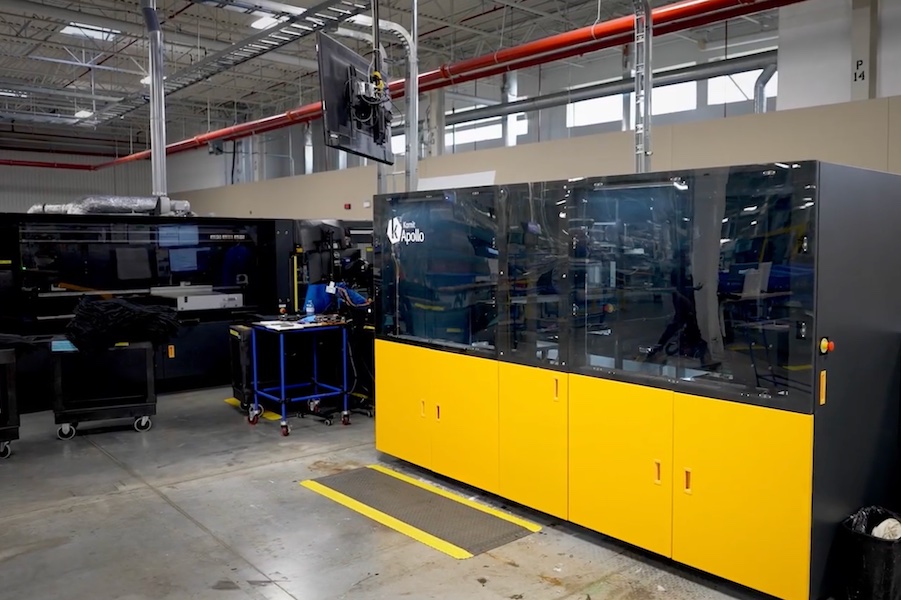
VistaPrint increases apparel production capacity with Kornit Apollo

Kornit Digital (NASDAQ: KRNT), a provider of on-demand digital textile production technologies, reports that VistaPrint has significantly increased its apparel production capacity through the implementation of the Kornit Apollo system. The installation has enabled the international print and design company to add approximately 25,000 units of weekly production capacity while improving production speed, operational efficiency and order turnaround times.

Latest News

#India ITME 2026

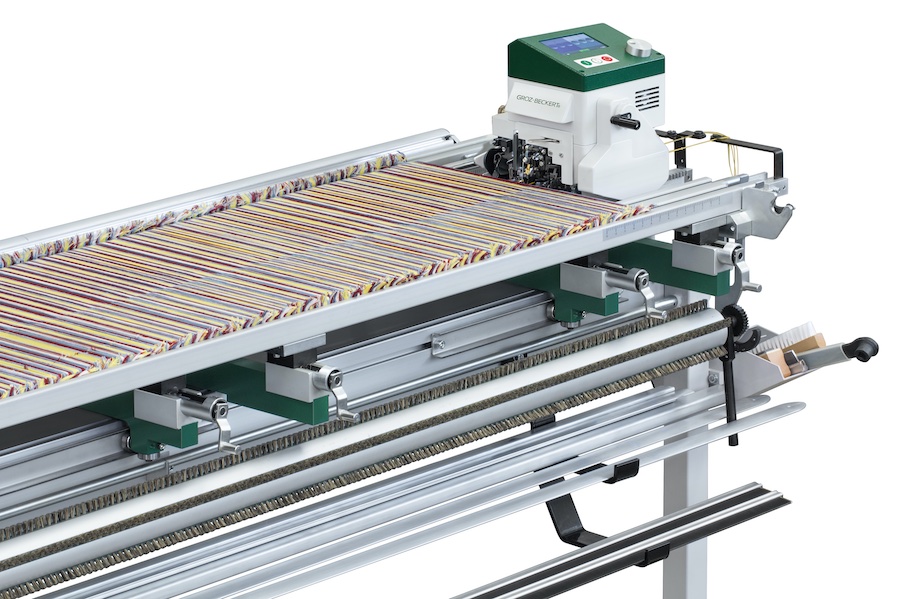
Groz-Beckert targets energy efficiency, productivity and process reliability across six textile technology sectors at India ITME 2026

At India ITME 2026 in Greater Noida from 4 to 9 December, Groz-Beckert will present its latest innovations across all six product areas – Knitting, Weaving, Nonwovens, Sewing, Tufting and Spinning. At Hall 14, Booth B6, the German textile technology specialist will showcase advanced components, systems, services and digital solutions designed to improve energy efficiency, productivity, process reliability and textile quality while addressing the increasingly diverse requirements of modern textile manufacturing.

#Knitting & Hosiery

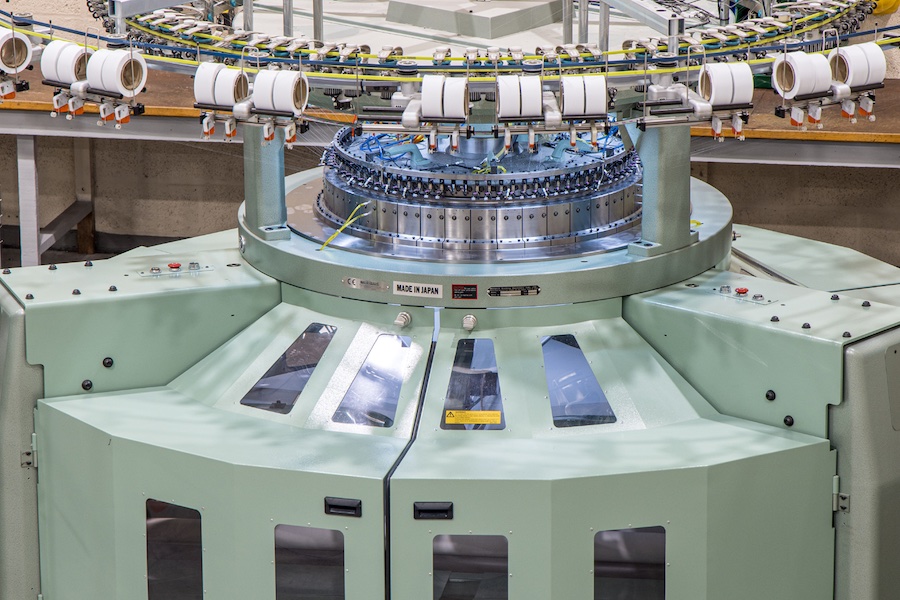
Monarch extends its Woven Look knitting technology from mattress ticking to apparel and performance textiles

A fabric technology originally developed to reproduce the appearance of woven mattress ticking by Monarch Knitting Machinery, a member of the British Textile Machinery Association (BTMA), is finding new applications in apparel. With the introduction of its 36-gauge OD5B-M-7ED44 double-knit machine, Monarch is expanding the possibilities for producing fine knitted structures that closely resemble woven textiles while retaining the stretch and comfort associated with knitting.

#Textiles & Apparel / Garment

VIATT 2027 names Thailand as its inaugural Partner Country

Thailand will take centre stage as the inaugural Partner Country at the Vietnam International Trade Fair for Apparel, Textiles and Textile Technologies (VIATT), returning to Ho Chi Minh City from 24 to 26 February 2027. Featuring a pavilion, dedicated product displays and various fringe events, the Partner Country programme will showcase Thailand’s textile and fashion capabilities, complementing an exhibitor line-up spanning VIATT’s three sectors. Alongside this new cooperation, eight additionally confirmed country and region pavilions and zones are set to strengthen the fair’s international offering.

#Recycling / Circular Economy

IVGT presents initial findings from the Erasmus+ project Skills4Circularity

At Albstadt ID 2026, hosted by Albstadt-Sigmaringen University of Applied Sciences, IVGT project manager Iris Schlomski presented initial findings from Skills4Circularity on 12 November 2026. She opened her presentation with an estimate from the European Environment Agency: the EU generated around seven million tonnes of textile waste in 2022. The Erasmus+ project brings together 21 partners from twelve countries to identify the skills textile and clothing professionals need to design more durable products, use fewer resources in production and recover fibres after use.

TOP