[pageLogInLogOut]

#Composites

Covestro receives JEC Innovation Award

Covestro received the JEC Innovation Award in the "Sustainability" category for its development of polyurethane resins for wind rotor blades and coatings for offshore equipment. © Covestro
Recognition for innovative and more sustainable composite solutions
  • Polyurethane resins for high productivity of wind turbine blades
  • Polyurethane-based coatings for easy application and durable protection in offshore conditions

Covestro, a leading supplier of innovative and sustainable material solutions, is a winner of the JEC Innovation Award 2021 in the "Sustainability" category. With the award, the jury recognized the company´s polyurethane (PU) infusion resins for the efficient production of wind rotor blades and coatings for offshore wind turbines. For 25 years, the JEC Innovation Award has been a leading award for the development and application of composite materials.

"Covestro takes the award as an honor but also as a responsibilty to deliver on its Circular Economy vision. Enabling growth for the global wind industry is one of the company’s major goals," said Dirk Soontjens, External Representative for Covestro in the Polyurethanes Wind Segment, at the award ceremony. "The productivity and good mechanical properties of the resin system also provide the opportunity to design longer and more durable blades to achieve higher annual energy production and lower energy costs, while removing roadblocks that the industry faces."


More efficient production of rotor blades

The processing and mechanical properties of Covestro's PU were studied through prototyping and advanced computer simulations. Thanks to their low viscosity at room temperature and high reactivity at elevated temperatures, they enable rapid infusion and curing. Compared with epoxy resins, this leads to significantly shorter rotor blade production cycles. Together with the potential for weight savings and their resistance, the PU resins reduce total cost of ownership by increasing energy efficiency and lowering manufacturing and maintenance costs.

In addition, several Covestro coating solutions for offshore wind turbines were included in the case presented for the JEC Innovation Award. These include a solvent-free gelcoat, a waterborne 2-component topcoat and a polyaspartic-based leading edge protection coating. The systems feature excellent adhesion properties on PU composites and were successfully tested under simulated offshore conditions. They facilitate the manufacturing process for rotor blades and thus improve the productivity of wind turbines.


More News from Covestro AG

#Smart Textiles

Covestro, FILK Freiberg, and OUT e.V. develop flexible, conductive polymer smart textile system

As the smart textiles market continues to grow across healthcare, personal protection, sportswear, and automotive applications, developers are seeking new ways to integrate electronic functionality directly into textiles, without the rigidity and complexity of conventional wiring. To address this challenge, FILK Freiberg Institute, an independent research institution with expertise in polymer coatings for textile applications, collaborated with Optotransmitter-Umweltschutz-Technologie (OUT) e.V. The joint project, funded under the German Industrielle Gemeinschaftsforschung (IGF) program of the Bundesministerium für Wirtschaft und Energie (BMWE), focused on developing flexible, conductive polymer surfaces for next-generation smart textiles.

#Techtextil 2026

Covestro to exhibit solutions for a more sustainable and productive textile industry at Techtextil 2026

Covestro will present a broad portfolio of material innovations for textile coatings, adhesive films and thermoplastic polyurethanes (TPUs) at Techtextil 2026 (Hall 11.0, Booth C79). The exhibits will demonstrate how advanced solutions can enhance durability, recyclability and manufacturing efficiency across applications such as automotive, infrastructure, protective apparel and sportswear. A particular focus will be on more sustainable coating technologies, including antimicrobial systems based on INSQIN® in combination with AGXX from Heraeus Precious Metals, as well as the integration of Pontacol® thermoplastic adhesive films into Covestro’s offering.

#Technical Textiles

Covestro showcases monomaterial concept in autonomous SUE People Mover

UE | STUDIOS has unveiled the fully autonomous electric minibus “Self-driving Urban E-Shuttle” (SUE), placing strong emphasis on sustainable material design. Developed within a project funded by the Federal Ministry for Economic Affairs and Energy (BMWE) and the European Union, the vehicle will begin public road testing this year. At the core of the concept is the consistent use of recyclable monomaterials to improve circularity at end of life.

#Textile chemistry

Covestro and Heraeus Precious Metals collaborate to enable safer, more sustainable antimicrobial textile coatings

Laboratory tests reveal that AGXX antimicrobial surface technology from Heraeus Precious Metals is fully compatible with Impranil® PU dispersions which are part of the waterborne INSQIN® textile coating technology from Covestro, paving the way for more sustainable antimicrobial textile coatings. This discovery comes at a key moment for the textile coatings industry. As the sharing economy continues to grow, more people are coming into regular contact with high-use surfaces, creating ideal conditions for bacteria, viruses, and other microorganisms to thrive.

More News on Composites

#ITMA Asia + CITME 2026

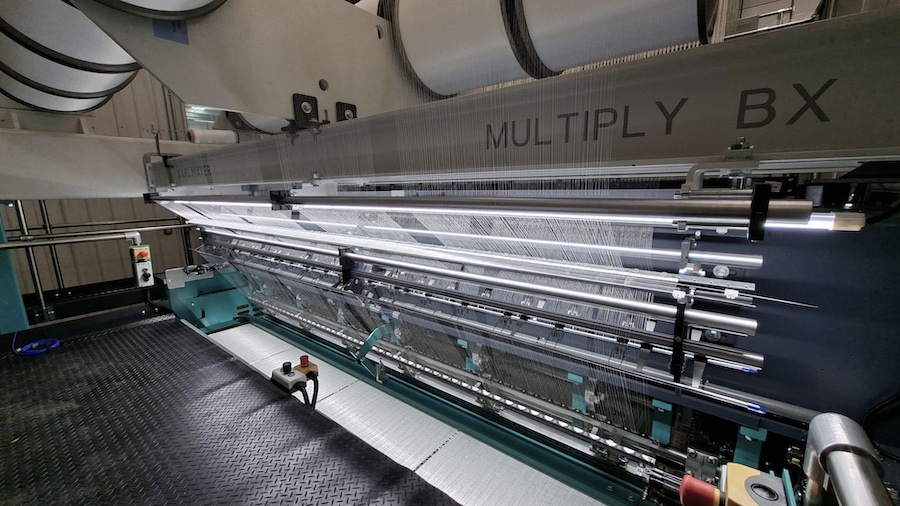
KARL MAYER introduces MULTIPLY BX for high-efficiency wind turbine reinforcement fabrics

KARL MAYER is expanding its composite machinery portfolio with the new MULTIPLY BX, a biaxial warp knitting machine specifically developed for the production of reinforcement textiles used in wind turbine rotor blades. Designed for high output and efficient material utilisation, the machine achieves production speeds of up to 500 m/h and offers a productivity increase of 20 to 25% compared with the established MAX GLASS ECO. The MULTIPLY BX will make its debut at the KARL MAYER (China) Product Show in Changzhou during ITMA ASIA 2026.

#Research & Development

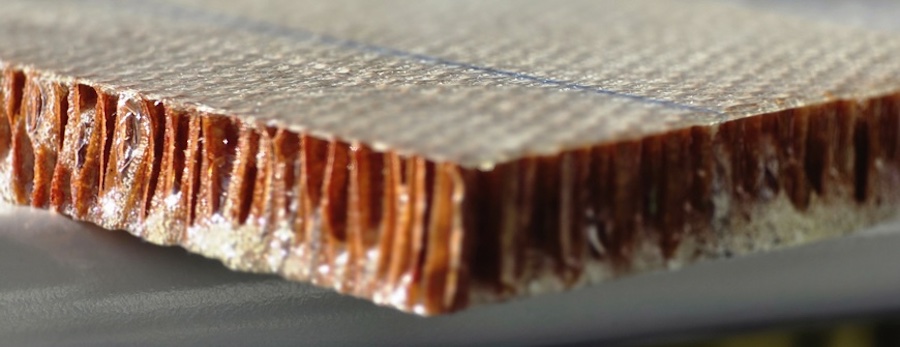
Novel flame-retardant and recyclable fiber-reinforced composite

Airplanes and passenger trains must meet strict safety requirements, including fire safety standards. This calls for materials that are flame-retardant, lightweight, robust, and scalable. Empa researchers, in collaboration with their industry partner Elantas, have now succeeded for the first time in making such a material – a composite – fully recyclable.

#Composites

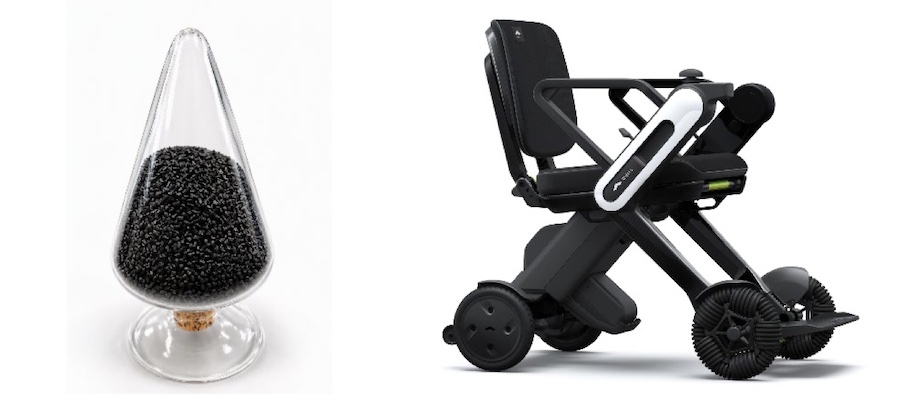
WHILL selects Teijin’s tough, lightweight Carbon Fiber Composite for new last-mile mobility

Teijin Limited announced today that WHILL Inc., a global leader in inclusive mobility technology, has selected Sereebo® P CFP series, a carbon fiber-reinforced thermoplastic (CFRTP) material, for key structural components of the upcoming WHILL Model C Lite. Sereebo® P CFP series provides high strength, light weight, design flexibility and system cost advantages to the Model C Lite, which is a battery powered, single-seat, last-mile device. This new model combines maneuverability with light weight and one-handed folding to ensure ease of handling and operation.

#Composites

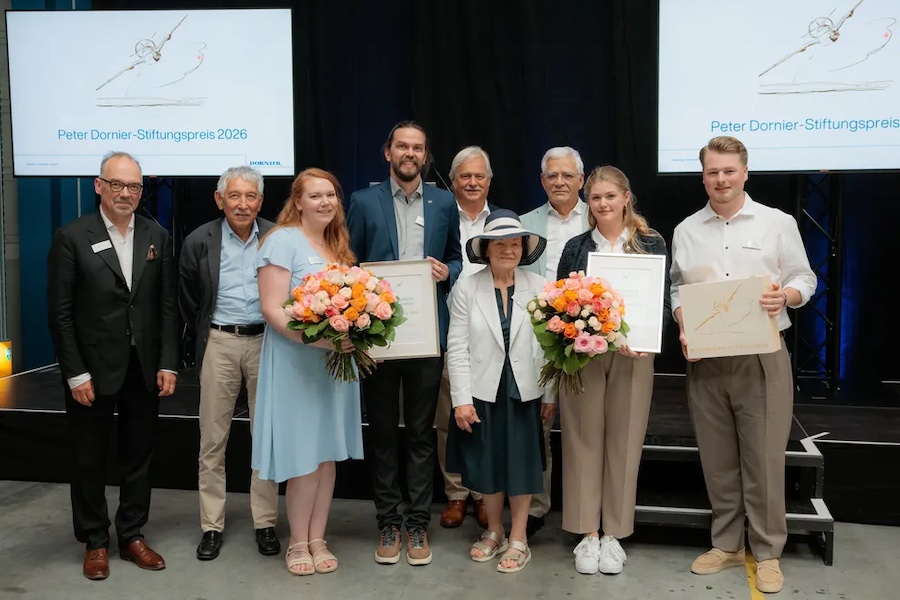
Fewer pores, greater impact tolerance: Peter Dornier Foundation Prize 2026 honours material research on fibre-reinforced composite components for aerospace industry

Microscopically small pores that form during manufacture, or barely visible impact damage, can severely impair the load-bearing capacity and service life of fibre-reinforced composite components. Two young researchers have presented groundbreaking work in this field and will both be awarded the 2026 Peter Dornier Foundation Prize: Dr.-Ing. Benedikt Neitzel from the Technical University of Ilmenau for his doctoral thesis on pore minimisation in the RTM process, and Johanna Buschmann, M.Sc., for her master’s thesis, completed at the German Aerospace Centre, on the improved impact tolerance of 3D fabrics compared to 2D laminates.

Latest News

#Textile processing

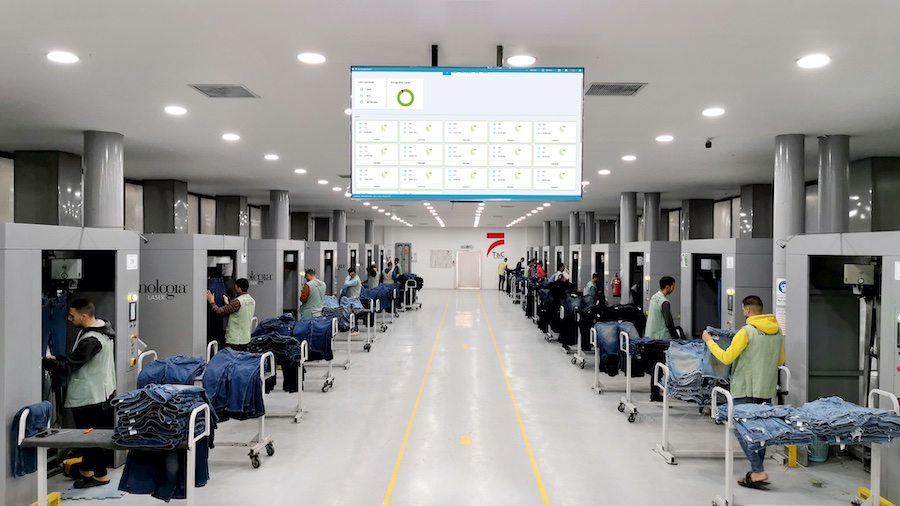
Jeanologia combines digitalisation, laser and ozone technology to strengthen China’s textile competitiveness

At ITMA Asia + CITME 2026 in Shanghai, Jeanologia showcased how the combination of digitalisation, laser technology and G2 Ozone can help China’s textile industry improve productivity, speed, quality and efficiency. With its Compact Super Flash laser system and integrated production concepts, the Spanish technology specialist demonstrated how connecting product development and industrial production can enable faster, more automated and sustainable manufacturing processes.

#Textile chemistry

Flame protection and OEKO-TEX® certification: Gulec Chemicals clears an important hurdle

Three halogen-free flame retardants from German specialist Gulec Chemicals have been included in the OEKO-TEX® list of accepted Active Chemical Products (ACP). The listing opens up additional opportunities for textile finishers, coaters and manufacturers of technical textiles seeking to combine demanding fire protection requirements with certification according to OEKO-TEX® STANDARD 100.

#Dyeing, Drying, Finishing

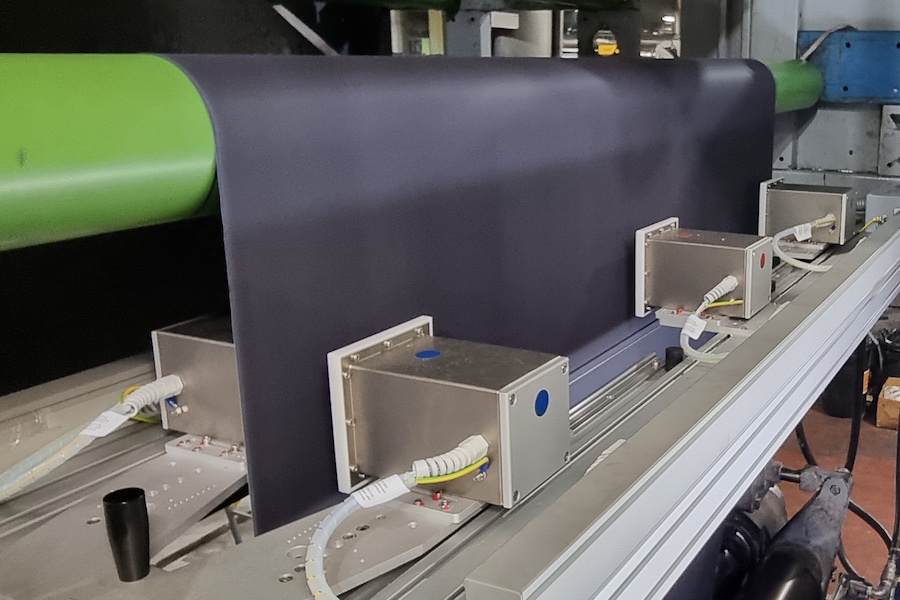
PLEVA improves dyeing consistency with inline microwave measurement of liquor pick-up

Consistent shades are essential in continuous textile dyeing. Yet variations in fabric absorbency or uneven padder pressure can go unnoticed until the end of the line. By then, hundreds of metres of fabric may already be affected and may become second-choice or rejected.

#Recycling / Circular Economy

DITF establishes CYCLOTEXUM recycling center to advance mechanical and solvent-based textile recycling

As part of the CYCLOTEXUM research project, the German Institutes of Textile and Fiber Research Denkendorf (DITF) established the CYCLOTEXUM recycling center. There, in collaboration with industry partners, the center develops application-oriented solutions for mechanical and solvent-based recycling processes. The technologies developed make a significant contribution along the textile value chain toward the efficient use of textile resources in the future and the transition of production in the German textile sector to a circular economy. The project was funded by the Ministry for the Environment, Climate and Energy Sector of the State of Baden-Württemberg.

TOP