[pageLogInLogOut]

#Associations

German textile industry and retailers form alliance to shape textile EPR system
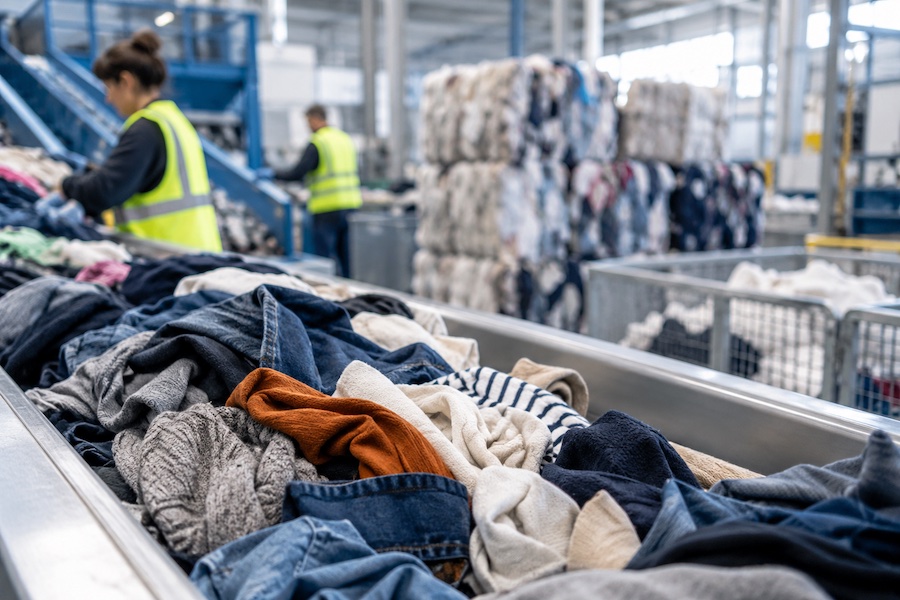
The new Alliance for Textile Circularity aims to help shape a practical and economically viable EPR system for the collection, sorting and recycling of textiles and footwear in Germany. © 2026 TexData International (Generated with the help of AI)
Germany’s textile and fashion industry and retail sector have joined forces to establish the “Alliance for Textile Circularity” (Allianz für textile Kreisläufe). Initiated by the German Textile and Fashion Industry Association (Gesamtverband textil+mode) and the German Retail Federation (HDE), the alliance aims to contribute industry expertise to the development of Germany’s future Extended Producer Responsibility (EPR) system for textiles and footwear.

The two associations are inviting companies, institutions and other stakeholders across the textile value chain to join the initiative and participate in shaping the transition towards a more circular textile economy.

The establishment of the alliance comes as Germany prepares the national implementation of European requirements for Extended Producer Responsibility for textiles and footwear. Under the future system, companies placing relevant products on the German market will assume financial responsibility for their collection and subsequent waste management.

The alliance is calling for an implementation that is practical, efficient and minimizes unnecessary bureaucracy while supporting the environmental objectives of textile circularity.

“The introduction of Extended Producer Responsibility is an important building block on the way towards a functioning textile circular economy,” said Dr. Uwe Mazura, Managing Director of Gesamtverband textil+mode. “However, it is crucial that the companies that bear the financing and responsibility can also actively contribute their expertise to the design of the system.”

Mazura pointed to the expertise available within Germany’s textile and fashion industry and textile research sector, arguing that this knowledge should be incorporated into the development of practical solutions for circularity.

Equal rules for European and non-European sellers

A central concern for the alliance is the application of EPR requirements to all companies placing textile products on the European market, including international e-commerce platforms and suppliers based outside the EU.

Stefan Genth, Managing Director of the German Retail Federation (HDE), stressed that the effectiveness of EPR would depend on consistent application of the rules.

“Extended Producer Responsibility can only be successful if it applies equally to all market participants,” Genth said. “German and European companies cannot be expected to bear the costs and obligations of an EPR system while international platforms or suppliers from third countries remain exempt from these obligations.”

According to Genth, companies placing products on the European market should be subject to the same responsibilities in order to establish fair competitive conditions.

The issue has become increasingly important for the European textile, apparel, footwear and retail sectors as international direct-to-consumer and platform business models account for a growing part of the market. At the same time, European companies are preparing for a broader regulatory framework covering product sustainability, circularity and end-of-life responsibility.

Industry seeks role in EPR system design

The new alliance is calling for manufacturers and retailers to have a defined role in designing the future EPR system. Its priorities include a clear and efficient system architecture, transparent allocation of costs according to responsibility, legal certainty and a harmonized European scope.

The initiative also calls for competitive conditions that ensure the obligations apply consistently to all relevant market participants.

The German textile industry has already been developing proposals for the implementation of textile EPR. In February 2026, Gesamtverband textil+mode presented an updated model proposing a streamlined and transparent structure for producer responsibility and registration in Germany. The association has also been working with textile research partners and organizations experienced in existing take-back systems on approaches for textile collection and recycling.

The broader objective of the Alliance for Textile Circularity is to contribute to an EPR system for textiles and footwear that combines environmental effectiveness with economic viability while supporting the competitiveness of companies operating in Germany.

Companies, institutions and other stakeholders along the textile value chain are being invited to participate in the initiative and contribute to the further development of the proposed system.

Allianz für textile Kreisläufe (German site)


More News from Gesamtverband textil+mode

More News on Associations

#Associations

Automation, digitalization and new business models are shaping the future of footwear and leather technology

The European footwear and leather machinery industry is facing profound transformations. Global competitive dynamics, technological innovation, automation and digitalization are fundamentally reshaping markets, production processes and business models. This is one of the key findings of the new study “Threads of the Future – Footwear and Leather Technology Edition”, which was presented today by VDMA Textile Care, Fabric and Leather Technologies (VDMA TFL) during a press conference at SIMAC Tanning Tech in Milan.

#Associations

EURATEX calls for urgent action on industrial competitiveness

EURATEX, the European Apparel and Textile Confederation, welcomes today’s State of the Union Address by European Commission President, Ursula von der Leyen, and in particular her recognition of Europe’s need to rebalance unfair trade, cut red tape, and strengthen its industrial and strategic autonomy.

#Raw Materials

Cotton Brazil Dialogues 2026 concludes with 50 international participants immersed in Brazilian cotton production

The Cotton Brazil Dialogues concludes its 2026 edition after a series of technical visits to farms, cotton gins and reference centers, as well as workshops focused on Brazilian cotton production. A total of 50 participants from 14 countries took part in the field trips. The initiative is led by the Brazilian Association of Cotton Growers (Abrapa) and the National Association of Cotton Exporters (Anea), with support from the Brazilian Trade and Investment Promotion Agency (ApexBrasil).

#Europe

European textile industry calls for €10 handling fee on ultra-fast-fashion imports

The introduction of the €3 customs duty on low-value imports marks an important milestone in Europe’s efforts to address the challenges created by the rapid growth of ultra-fast-fashion imports. Together with the abolition of the €150 customs duty exemption, it demonstrates that policymakers are willing to act when market distortions become impossible to ignore. However, the European textile and clothing industry considers this a first step rather than the final destination.

Latest News

#Recycling / Circular Economy

Moving Advanced Recycling from Innovation to Implementation

The Advanced Recycling Conference 2026 explores technologies, markets, financing and scale-up of innovative recycling solutions for waste streams including mixed plastic waste, textiles and PVC. Europe’s chemical and materials sector faces growing pressure to close carbon loops, strengthen raw-material safety and resilience and meet increasingly ambitious EU recycling targets. Against this backdrop, the Advanced Recycling Conference (ARC) will bring together industry leaders, technology providers, researchers, innovators and policy-makers on 17–18 November 2026 in Cologne, Germany.

#Sustainability

Cascale launches member-led process to shape 2030 strategy

Cascale has launched a member-led process to define the industry alliance’s strategic direction for the next decade. At the Cascale Annual Meeting 2026 in Athens, CEO Ying McGuire announced that members will contribute to an industry system map that will inform Cascale’s 10-year vision, its 2030 strategy and priorities for 2027. The new strategy is scheduled to be finalized in December.

#Functional Fabrics

PERFORMANCE DAYS introduces Digital Design Journey with CLO and VIZOO

PERFORMANCE DAYS will introduce a new Digital Design Journey at its upcoming edition in Munich, connecting physical fabric sourcing with 3D product development. Supported by CLO and VIZOO, the installation will demonstrate how real performance fabrics can be digitized and incorporated into virtual garment development workflows.

#Nonwovens

INDA hires Ben Muller as executive director

INDA, the Association of the Nonwoven Fabrics Industry, announced that Ben Muller has joined the association as executive director. Muller brings more than 20 years of leadership experience spanning nonprofit organizations, corporations and trade associations.

TOP