[pageLogInLogOut]

#Associations

Speakers address textile issues at AATCC meetings

AATCC’s upcoming research committee meetings feature a day of speakers hosted by its four interest groups. The full week of meetings will be held in a hybrid format—in person at the AATCC Technical Center in North Carolina AND online.

Interest Group & Research Committee Meetings

November 14-17

https://www.aatcc.org/aatcc-events/research/


AATCC interest groups bring together textile professionals with shared interests and expertise. The Association’s four current groups will meet the afternoon of November 14, before the other Research Committee Meetings, for discussion and presentations. 


Concept 2 Consumer

The Concept 2 Consumer (C2C) interest group provides a forum for textile, apparel, and home fashion manufacturers and retailers.

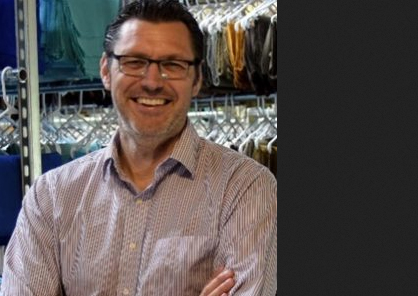
On Monday, November 14, 2022 at 12:30 pm, ET, Ron Pedemonte of DyStar Americas will give an overview of what classifies a dyestuff as sustainable, how to combine it with sustainable substrates, processes, and how retailers can have visibility and support their sustainability mission statements.
© 2022 AATCC
© 2022 AATCC


Steps for Su

stainable Textiles: Colors and colorations are part of our daily lives, and human beings have been coloring textiles since 3,500 BC. Until 1856, when W H Perkins discovered the synthetic dye mauveine, all textile materials were colored with natural dyes and pigments. Today, 90% of textiles are dyed with synthetic dyes, and the manufacturing of textiles is the second-most polluting industry, contributing to high CO2 emissions, industrial waste, and water consumption.

Considering the fashion industry’s unfavorable environmental effects, sustainability must be the focus of the entire Supply Chain. This presentation will look at the steps we can take to achieve sustainable textiles now and in the future.

Materials

The Materials Interest Group was formed to stimulate and expand the collective knowledge and development of new materials related to the fiber and fiber products industries via innovative modifications of existing structures and/or creation of unique compositions of matter.

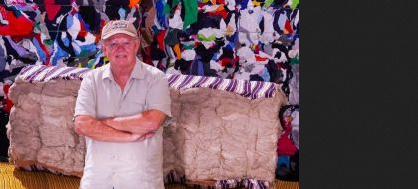
On Monday, November 14, 2022, at 1:45 pm, ET, Guy Carpenter, of Bear Fiber, will present, “American Hemp for Textiles and Apparel—Where Are We Now?”

Hemp fiber can produce longer-lasting higher-value garments with important technical attributes well as help the fashion industry become more sustainable. Introducing a natural fiber, grown domestically, that can make many yarn blends better and make better yarn.
© 2022 AATCC
© 2022 AATCC


Chemical

Applications

The Chemical Applications Interest Group concentrates on the technologies, equipment, systems, and processes, as well as testing the physical/mechanical properties, of chemically treated textile substrates.

On Monday, November 14, 2022, at 3:00 pm, ET, Bryan Dill of Archroma will give a presentation on, “Circle Black: A Sustainable Dyeing System Dye Knit Fabrics.”

© 2022 AATCC
© 2022 AATCC


The knitwear market

for black articles is always in high demand. Knit fabric is usually dyed on jet overflow machines by exhaust application. Dye classes traditionally used in this process are fiber reactive and direct dyes. The Circle Black system is an alternative technology with sustainable advantages compared to traditional processes.

Rising Professionals

The AATCC Rising Professionals Interest Group addresses professional development, networking, mentorship, leadership, and other aspects of a career in textiles. The Rising Professionals Interest Group provides a “home” for individuals new to AATCC and/or new to the industry—whether recent graduates or seasoned professionals coming to textiles from another industry.

The RISE meeting will be held Monday, November 14, at 4:15 pm, ET, Speaker To Be Announced.

Committee Meetings

Attending AATCC committee meetings is a great way to make sure your voice is heard when it comes to textile test methods, educational programs, and more. You get a behind-the-scenes look at what’s new in the textile industry and get a personal connection with the people making it happen. If you’re ready to get involved, you can help influence decisions about the projects and research to pursue. All at no cost to you or your organization. Registration is free and you don’t have to be a member of AATCC—though membership has other valuable benefits!

Don’t miss your opportunity to attend these meetings and make an impact on the textile industry. Get more information and register at http://www.aatcc.org/aatcc-events/research/.

More News from American Association of Textile Chemists and Colorists

#Associations

AATCC announces 2025 Herman & Myrtle Goldstein Graduate Student Paper Competition winners

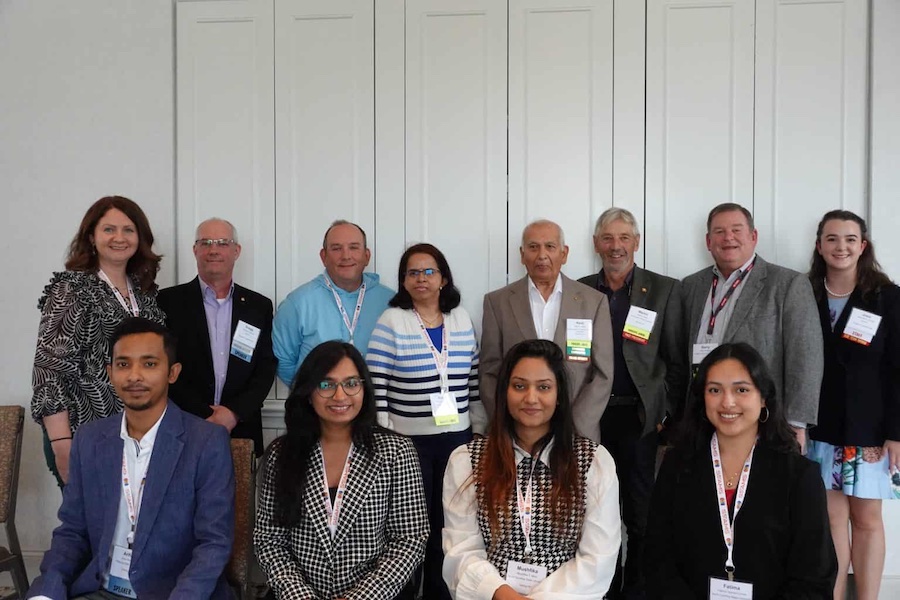
The American Association of Textile Chemists and Colorists (AATCC) recognized the winners of the 2025 Herman & Myrtle Goldstein Graduate Student Paper Competition. Founded in 1982 to give student members the chance to conduct and present original research, the competition was renamed in 1994 in honor of Herman and Myrtle Goldstein, following their US$60,000 endowment. Their gift is a lasting remembrance of their dedication to young people in the textile industry.

#Research & Development

New funding available for textile research

The AATCC Foundation Student Research Support Grant Program provides financial assistance for undergraduate and graduate students pursuing textile-related projects. Students may submit proposals now for funding to be awarded January 2026. Applications must be submitted by October 1, 2025, to be considered.

#Recycling / Circular Economy

AATCC’s Circularity Conference approaches as organization continues 2025 Sustainable Textile Event series

The American Association of Textile Chemists and Colorists (AATCC) announces that registration is closing soon for its highly anticipated Circularity Conference, continuing this year’s sustainability event series that has delivered significant value to industry professionals.

#Associations

AATCC Textile Standards adopted by Colombian and Sri Lankan Governments

AATCC test methods and procedures are international standards, meeting the criteria set forth by the World Trade Organization and used around the globe. The standards gain additional recognition through Memoranda of Understanding with Colombia and Sri Lanka.

More News on Associations

#Textile processing

Major expansion for ACG Kinna follows record year

In response to growing demand for its full textile and finished product line automation services, ACG Kinna – a member of TMAS, the Swedish textile machinery association – has inaugurated a 1,000-square-metre expansion at its headquarters in Skene, Sweden.

#Techtextil 2026

Precision, performance and progress: British textile machinery at Techtextil and Texprocess 2026

As global demand accelerates for lighter, stronger and more sustainable technical textiles, the machinery and testing technologies behind their manufacture are evolving at pace. At the Techtextil and Texprocess exhibitions in Frankfurt this April, eight members of the British Textile Machinery Association (BTMA) will demonstrate how advanced engineering continues to shape the performance, precision and resource efficiency of advanced fibre and fabric production.

#Nonwovens

INDA honors four industry leaders with 2026 Lifetime Service and Technical Achievement Awards

INDA, the Association of the Nonwoven Fabrics Industry, has announced the four distinguished recipients of the 2026 INDA Lifetime Service Award and Lifetime Technical Achievement Award. Tom Daugherty, Pricie Hanna, Carey Hobbs, and CK Wong are being recognized for their exceptional leadership, innovation, and enduring contributions to advancing the nonwovens industry and strengthening the global community it serves.

#Associations

Azerbaijan Textile Association (ATA) becomes member of ITMF

The Azerbaijan Textile Association (ATA) has officially become a Member Association of the International Textile Manufacturers Federation (ITMF), further strengthening Azerbaijan’s integration into the global textile value chain.

Latest News

#Textiles & Apparel / Garment

YKK launches “YZiP® Light” aluminum alloy zipper for cotton pants

YKK Corporation (Headquarters: Chiyoda-ku, Tokyo; President: Koichi Matsushima; hereafter, YKK) has launched YZiP® Light, a lightweight aluminum alloy zipper for cotton pants, with sales beginning in late March. The introduction of YZiP® Light expands YKK’s zipper portfolio—led by the flagship YZiP® copper alloy zipper—providing customers with greater flexibility to meet diverse garment needs.

#Techtextil 2026

Shima Seiki showcases WHOLEGARMENT® and 3D knitting solutions for technical textiles at Techtextil 2026

Leading textile technology solutions provider SHIMA SEIKI MFG., LTD. of Wakayama, Japan, along with its Italian subsidiary SHIMA SEIKI ITALIA S.p.A., will be participating in the Techtextil 2026 exhibition in Frankfurt, Germany next month. On display will be WHOLEGARMENT® and other advanced three-dimensional knitting applications across a wide range of industries besides fashion apparel that are not typically associated with knitting, such as technical textiles using industrial materials and advanced three-dimensional knitting.

#Raw Materials

The 83rd Plenary Meeting: Reports from the ICAC Secretariat

Every year, one of the most anticipated sessions at the International Cotton Advisory Committee's (ICAC) Plenary Meeting is the Reports from the Secretariat — and the 83rd edition in Bremen, Germany, did not disappoint.

#Research & Development

Textilfabrik 7.0 launched: Mönchengladbach becomes a real-world lab for sustainable textile production

With the official kick-off event of the Textilfabrik 7.0 (T7), a major transformation project for the German textile and apparel industry has been launched in the Monforts Quarter in Mönchengladbach. At the “Textile Roundtable,” an event format organized by the Zukunftsagentur Rheinisches Revier, representatives from industry, research, politics, and the regional economy came together to jointly lay the foundation for CO₂-neutral, circular, and economically viable textile production in Germany.

TOP