[pageLogInLogOut]

#Associations

AATCC announces call for award and leadership nominations

AATCC is full of creators, volunteers, and researchers, and AATCC applauds their contributions to the textile industry. AATCC recognizes achievements in science, service, and more every year. The association is now accepting nominations for recognition of excellence in the textile industry through March 31, 2021.

Nomination forms for all awards are available online at www.aatcc.org/about/awards. Anyone may nominate a deserving colleague or themselves for the following awards:

Olney Medal

Established in honor of Louis Atwell Olney, the founder and first president of AATCC, the Olney Medal recognizes outstanding achievement in textile or polymer chemistry or other fields of chemistry of major importance to textile science.

Chapin Award

Senior members who have dedicated 20 or more years of continuous service to the Association are eligible for nomination. The award is a presented as a beautifully illustrated scroll.

Millson Award for Invention

Awarded every three years, 2021 is your next opportunity to nominate an inventor or inventors who impacted the textile, fiber, polymer, and medical industries. Nominees need not be AATCC members. Group and posthumous nominations are also welcome.

Technical Committee on Research (TCR) Service Award

The award recognizes up to two senior members, with at least five years of continuous membership in AATCC, who have contributed outstanding technical service to the Association through activity in a research committee.


Future Leaders Award

Young professionals in the fields of textiles, apparel, and related material sciences are eligible for recognition as the future leaders of the Association. Nominees must be members of AATCC, 39 years of age or younger, and exhibit leadership skills.

Education Award

This award recognizes those members who have contributed extensively to the educational activities of AATCC.

Faculty Advisor Award

Nominate AATCC student chapter faculty advisors who actively work to ensure their AATCC student chapters are active and growing.

While most of the AATCC Board of Directors (BOD) will serve 2021-2022, the Materials Interest Group At-Large role will open sooner. Nominations for the BOD may be to Diana Wyman (diana@aatcc.org) by March 31. The election will be held this summer and the selections will be announced at the November 2021 annual meeting. For more information about the current Board members and job responsibilities, visit www.aatcc.org/about/bod.

More News from American Association of Textile Chemists and Colorists

#Associations

AATCC announces 2025 Herman & Myrtle Goldstein Graduate Student Paper Competition winners

The American Association of Textile Chemists and Colorists (AATCC) recognized the winners of the 2025 Herman & Myrtle Goldstein Graduate Student Paper Competition. Founded in 1982 to give student members the chance to conduct and present original research, the competition was renamed in 1994 in honor of Herman and Myrtle Goldstein, following their US$60,000 endowment. Their gift is a lasting remembrance of their dedication to young people in the textile industry.

#Research & Development

New funding available for textile research

The AATCC Foundation Student Research Support Grant Program provides financial assistance for undergraduate and graduate students pursuing textile-related projects. Students may submit proposals now for funding to be awarded January 2026. Applications must be submitted by October 1, 2025, to be considered.

#Recycling / Circular Economy

AATCC’s Circularity Conference approaches as organization continues 2025 Sustainable Textile Event series

The American Association of Textile Chemists and Colorists (AATCC) announces that registration is closing soon for its highly anticipated Circularity Conference, continuing this year’s sustainability event series that has delivered significant value to industry professionals.

#Associations

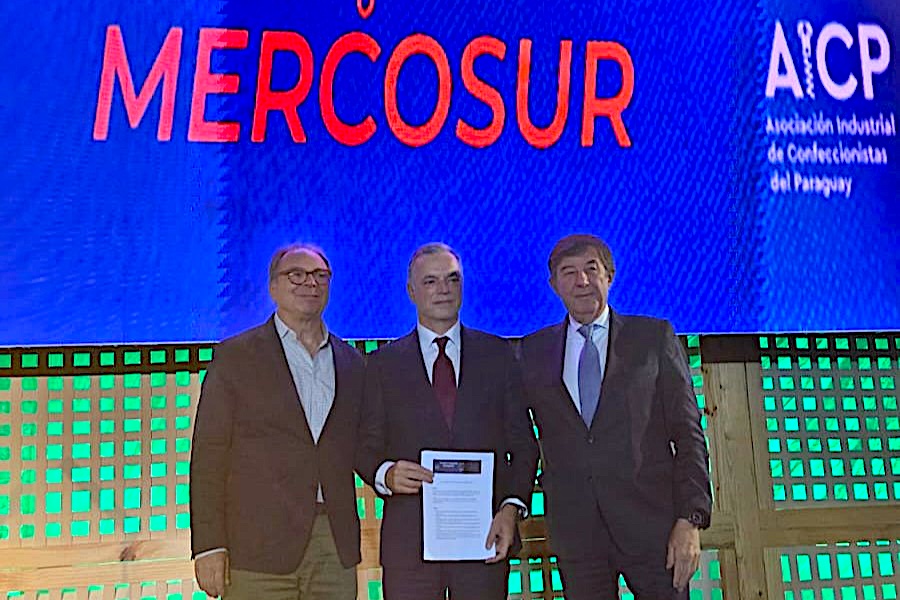
AATCC Textile Standards adopted by Colombian and Sri Lankan Governments

AATCC test methods and procedures are international standards, meeting the criteria set forth by the World Trade Organization and used around the globe. The standards gain additional recognition through Memoranda of Understanding with Colombia and Sri Lanka.

More News on Associations

#Associations

Business situation weakens slightly, but the industry stays cautiously optimistic

The International Textile Manufacturers Federation (ITMF) has published the results of its 39th Global Textile Industry Survey (GTIS), conducted from 14 to 22 July 2026 among companies along the entire global textile value chain. Worldwide, 10% of participants rated their business situation as good, 53% as satisfactory and 37% as bad — a balance of -26pp, down from -17pp in May but still well above the 2023 lows. All regions are now in negative territory, from South Asia at -3pp to North & Central America at -58pp.

#Associations

IVGT membership: expertise that pays off

For energy-intensive textile companies, government compensation mechanisms are an important economic factor. The IVGT successfully supports its member companies in applying for state aid and thereby regularly contributes to significant financial relief.

#Associations

Italian textile machinery orders show quarterly recovery in Q2 2026

In the period between April and June 2026, order intake for Italian textile machinery manufacturers showed mixed but encouraging signals for the second half of the year. The order index at constant prices stood at 46.6 points (taking 2021=100 as the base year), showing a slight decrease of 3% compared to the same quarter of 2025. This trend was largely due to the contraction recorded in the domestic market, which fell by 25% compared to the corresponding period of the previous year.

#Associations

Consolidation amidst difficult market conditions

The International Textile Manufacturer Federation has published its International Textile Industry Statistics (ITIS) on productive capacity and raw materials consumption in the short-staple organized (spinning mill-) sector in virtually all textile-producing countries in the world.

Latest News

#Raw Materials

Brazil sets new cotton export record and consolidates global leadership

Brazil ended the 2025/26 commercial year with a new record, consolidating its position as the world’s largest cotton exporter. Between August 2025 and July 2026, the country shipped 3,373,941 tonnes of the fiber, 19% more than in the previous cycle, and reached record revenue of US$5.3 billion. The result represents a milestone in Brazil’s expansion in the international market and reinforces the country’s role as a strategic supplier to the global textile industry.

#Raw Materials

Better Cotton Initiative partners with Avalo in AI plant breeding for climate-resilient cotton

The Better Cotton Initiative (BCI) has partnered with agriculture solutions company Avalo, whose platform accelerates the speed at which plants with key resiliency traits may be developed.

#Man-Made Fibers

The LYCRA Company expands its co-creation vision through an immersive Lifestyle District at Intertextile Shanghai.

The LYCRA Company, a global leader in fiber and technology solutions for the apparel industry, is reimagining the trade show experience at Intertextile Shanghai Apparel Fabrics Autumn Edition, which opened today in China. Building on the success of last year's ALL IN concept, the company has expanded its co-creation vision into a 356-square-meter Lifestyle District featuring partners Jingzili New Material, JYT Textile, Lianxingfa Knitting, and Trend Textile. The district is part of a larger 895-square-meter pavilion showcasing a total of 19 co-exhibitors. Together, they demonstrate how innovations in fiber, fabric, and garments can be combined to create compelling solutions for both work and play.

#Natural Fibers

Plastic-free stretch technologies drive new direction for denim innovation

As the denim industry looks for ways to reduce its reliance on synthetic fibres, plastic-free stretch technologies are gaining momentum. Developments based on mechanical fabric construction and natural rubber are demonstrating that comfort and stretch can be achieved without conventional elastane, supporting both recyclability and circular product design.

TOP



